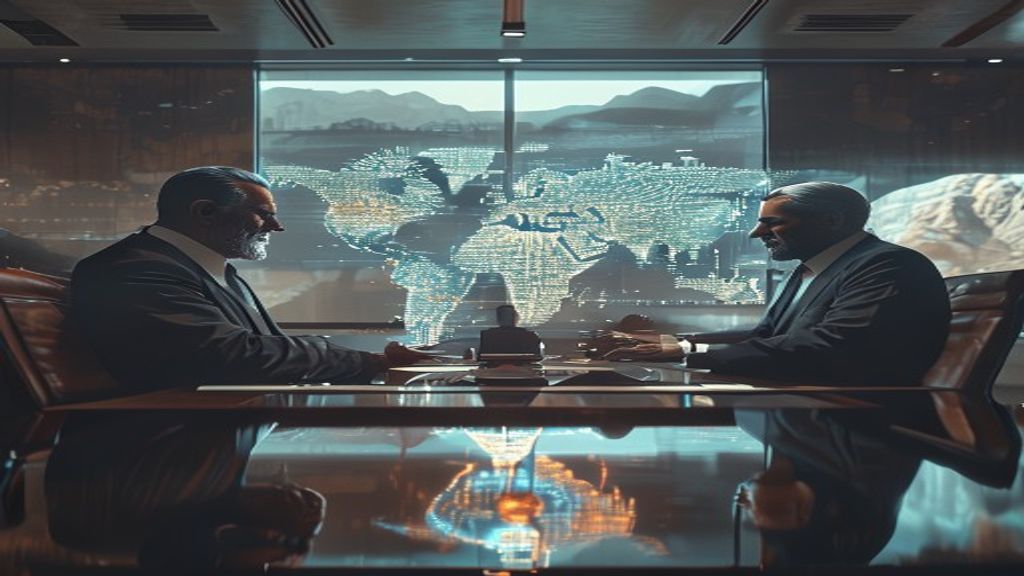
When Senator Vance declared his intent to ‘turn over a new leaf’ as US-Iran talks convene in Switzerland, my veteran journalist’s alarm bells didn’t just ring; they blared. Let’s be brutally honest: US-Iran relations aren’t a garden plot for turning leaves; they’re a minefield. This isn’t just about diplomatic niceties; it’s about the very architecture of Middle Eastern power and, frankly, global stability.
The Unveiling of a ‘New Leaf’
Vance’s sudden embrace of a ‘new leaf’ narrative is either a remarkable pivot or a tactical maneuver so subtle it borders on opaque. For years, the rhetoric from many American political figures, including those aligned with Vance’s general ideological leanings, has been anything but conciliatory towards Tehran. So, what changed? Is this a genuine shift in strategy, acknowledging the futility of perpetual antagonism, or is it a calculated move to gain leverage, perhaps even to set the stage for a different kind of pressure?
This isn’t naive hope; it’s high-stakes poker. The Swiss Alps, usually a backdrop for peace and neutrality, now host discussions fraught with decades of mistrust, proxy wars, and a nuclear program that remains a geopolitical flashpoint. We’re not just talking about two nations; we’re talking about an entire region that holds its breath.
The Ghost of Negotiations Past
To understand the present, we must confront the past. The ghost of the Joint Comprehensive Plan of Action (JCPOA), or the Iran nuclear deal, looms large. Its dramatic unraveling under the previous US administration left a bitter taste and solidified Tehran’s distrust of American commitments. Iran’s response? An accelerated nuclear program and a continued projection of influence across the region.
Any ‘new leaf’ must contend with this history. It’s not enough to simply say ‘let’s talk’; the underlying issues of sanctions relief, verification mechanisms, and Iran’s regional actions haven’t magically disappeared. As Dr. Anya Sharma, a senior fellow at the Institute for Geopolitical Studies, remarked to me off the record, ‘Vance’s pivot is either a calculated chess move or a profound misreading of Tehran’s long game. Either way, the ripple effects will be seismic.’
Why This Matters: The Bigger Picture
These talks aren’t a side-show; they’re central to several critical global dynamics:
Oil Markets & Global Economy
Any easing of tensions or sanctions could see Iranian oil re-enter global markets more robustly, potentially impacting prices. Conversely, a breakdown in talks could send crude soaring, fueling inflation and economic instability worldwide. Shipping lanes, particularly the Strait of Hormuz, remain vulnerable to geopolitical tremors.
Regional Stability & Proxy Conflicts
From Yemen to Lebanon, Syria to Iraq, US-Iran rivalry fuels conflicts that destabilize nations and create humanitarian crises. A genuine diplomatic breakthrough could pave the way for de-escalation; a failure could ignite new flashpoints.
Nuclear Proliferation
At its core, the talks are about preventing Iran from acquiring nuclear weapons. The stakes literally couldn’t be higher. Success means a safer world; failure opens a Pandora’s Box of proliferation risks.
Actionable Takeaways for the Discerning Observer
Don’t just read the headlines; dissect them:
- Watch the Language: Are both sides moving beyond maximalist demands? Look for specific proposals, not just vague commitments.
- Sanctions vs. Concessions: The devil is always in the details of sanctions relief and what Iran is willing to concede on its nuclear program and regional activities.
- Regional Reactions: How are Saudi Arabia, Israel, and other regional powers reacting? Their responses will be critical indicators of potential success or failure.
- Domestic Politics: Both in the US and Iran, domestic political pressures will heavily influence the negotiating teams. Understand the internal dynamics.
Vance’s ‘new leaf’ isn’t just a political soundbite; it’s a potential inflection point. But history teaches us that true change in US-Iran relations demands more than a turn of phrase. It requires profound strategic shifts, genuine concessions from all parties, and an unwavering commitment to a future that, frankly, few believe is truly possible. I remain a skeptic, but one who watches with an eagle eye for any genuine crack in the wall of animosity. The world holds its breath.