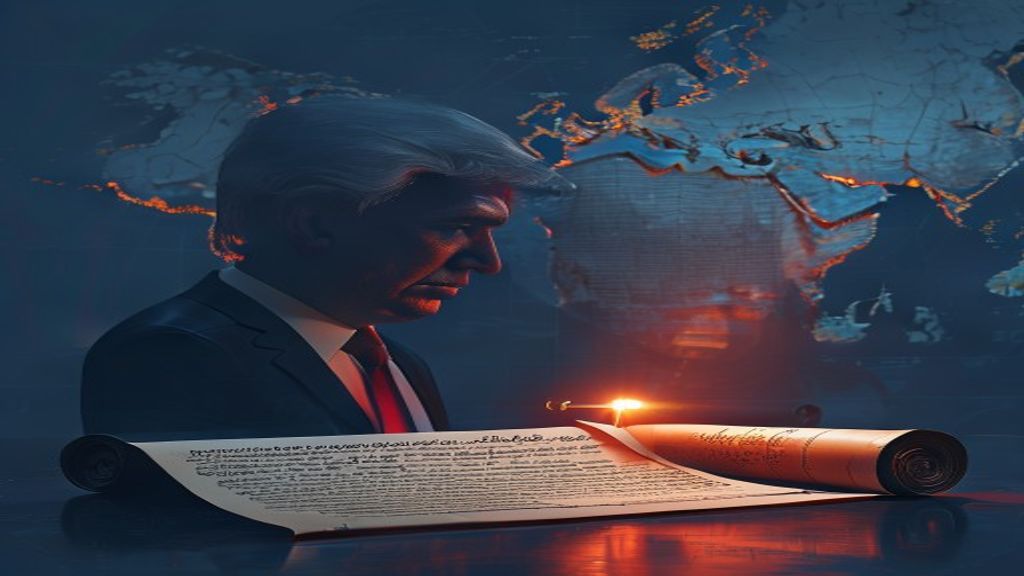
A tentative 60-day agreement concerning Iran has sent ripples through diplomatic circles, yet its fate hangs precariously on the approval of former President Donald Trump. This isn’t just another headline; it’s a critical moment that could reshape Middle East policy, global energy markets, and the intricate dance of international diplomacy. The news, initially reported as ‘Live Updates,’ underscores the immediate and profound implications of such a deal, especially given the turbulent history of U.S.-Iran relations.
For those tracking the ever-evolving geopolitical landscape, the phrase ‘tentative 60-day agreement’ immediately flags both opportunity and immense uncertainty. It suggests a potential de-escalation, a pause, or even a roadmap toward a more stable future. However, the ‘pending Trump’s approval’ caveat introduces a layer of complexity and unpredictability that is uniquely characteristic of modern U.S. foreign policy.
The Agreement: What We Know (And Don’t Know Yet)
While specifics remain under wraps, the very existence of a ‘tentative 60-day agreement’ implies a framework for some form of de-escalation or negotiation. Historically, such accords with Iran have centered on its nuclear program, regional proxy activities, and the reciprocal lifting or easing of sanctions. The ’60-day’ timeline suggests a period for:
- Verification: Allowing international inspectors or monitoring bodies to assess compliance with certain conditions.
- Further Negotiation: A window to iron out the finer details of a more comprehensive, long-term deal.
- Political Maneuvering: Both sides using the period to gauge international and domestic reactions, and to consolidate support.
The core of any such agreement would likely involve Iran making concessions on its nuclear enrichment levels, its missile program, or its regional influence, in exchange for some form of economic relief or security assurances. However, the exact nature of these concessions and benefits is the subject of intense speculation and diplomatic back-channel discussions.
Why Now? The Geopolitical Chessboard
Several factors could be driving this push for a tentative agreement:
- Economic Pressure on Iran: Years of stringent sanctions have severely impacted Iran’s economy, leading to internal dissent and a potential willingness to engage in diplomacy to alleviate hardship.
- Regional Instability: The broader Middle East remains a tinderbox, and a limited agreement could be seen as a way to prevent wider conflict or proxy clashes.
- U.S. Election Cycle: With a presidential election on the horizon, the current U.S. administration might be keen to demonstrate diplomatic progress, or alternatively, to set the stage for future policy if Trump were to return to office.
- Evolving Alliances: Shifting dynamics, including China’s growing role in the region and Russia’s preoccupation with Ukraine, could be creating new opportunities or necessities for Iran to engage.
The Trump Factor: A Deal’s Ultimate Test
The crucial phrase ‘pending Trump’s approval’ is a massive asterisk. Donald Trump famously withdrew the U.S. from the Joint Comprehensive Plan of Action (JCPOA), commonly known as the Iran nuclear deal, in 2018. His ‘maximum pressure’ campaign, which followed, aimed to cripple Iran’s economy and force it to the negotiating table on new terms.
His potential return to the White House casts a long shadow over any current or future diplomatic efforts. Trump’s foreign policy approach is often characterized by:
- Transactional Diplomacy: A preference for bilateral deals where he perceives a clear win for the U.S.
- Skepticism of Multilateralism: A distrust of international agreements and institutions.
- Personal Discretion: A strong reliance on his own judgment, often overriding traditional diplomatic advice.
For any agreement to gain his blessing, it would likely need to be framed as a significant improvement over the JCPOA, offering more stringent controls on Iran and fewer perceived concessions from the U.S. Without his explicit or implicit buy-in, even a well-intentioned agreement could face a similar fate to the JCPOA, being dismantled or ignored upon a potential change in U.S. administration.
Implications: A High-Stakes Bet
The ramifications of this tentative agreement, whether it ultimately succeeds or fails, are enormous.
If Approved (and Sustained):
A successful agreement, even a short-term one, could:
- De-escalate Tensions: Provide a much-needed cooling-off period in a volatile region.
- Open Diplomatic Channels: Potentially pave the way for broader talks on regional security and arms control.
- Impact Oil Markets: The prospect of more Iranian oil entering the global market could influence prices, though any significant increase would likely be gradual.
- Strengthen Moderates in Iran: A successful diplomatic path could empower those within Iran advocating for engagement over confrontation.
If Rejected (or Undermined):
Should the agreement falter, particularly due to a lack of U.S. political will, the consequences could be grim:
- Increased Confrontation: Iran might accelerate its nuclear program or intensify its regional activities, leading to heightened risks of military conflict.
- Further Sanctions: The U.S. might double down on its ‘maximum pressure’ strategy, exacerbating Iran’s economic woes.
- Allied Discord: European allies, who often favor a diplomatic approach, could find themselves at odds with U.S. policy, straining alliances.
- Regional Instability: Without a diplomatic off-ramp, the risk of miscalculation and escalation in the Middle East grows significantly.
The Road Ahead: Uncertainty is the Only Certainty
This 60-day window is more than just a timeline; it’s a crucible for diplomacy. It tests the willingness of all parties to find common ground, the strength of international consensus, and the unpredictable force of domestic politics, particularly in the United States.
The world watches, holding its breath, as this tentative agreement navigates the complex currents of international relations and the singular challenge of securing approval from a figure whose past actions have already reshaped the landscape of U.S.-Iran policy. The next two months will reveal whether this fragile accord can evolve into a durable solution or if it’s merely another fleeting moment in a long, troubled history.