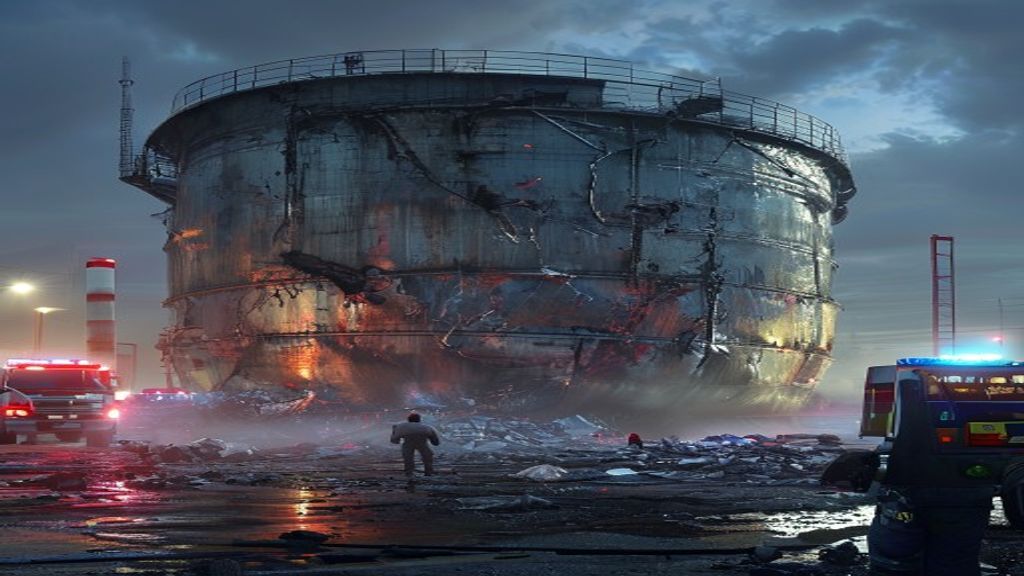
A catastrophic industrial accident has rocked Longview, Washington, where a chemical tank at the Nippon Dynawave Packaging Company facility imploded, leaving at least one person dead and nine others unaccounted for. The incident has sent shockwaves through the community and ignited urgent questions about industrial safety and emergency response protocols.
The Catastrophe Unfolds in Longview
Details remain fluid, but what is clear is the devastating impact of the tank implosion at the Nippon Dynawave plant. Emergency services, including local fire departments, hazmat teams, and search and rescue units, descended upon the scene in force. The immediate aftermath was one of chaos and a desperate search for survivors amidst the wreckage.
While the exact timing of the implosion is still under investigation, early reports indicate a sudden, violent collapse of a large chemical storage tank. Witnesses described a deafening sound and a subsequent cloud of debris and vapor, underscoring the sheer force involved in such an event. The primary concern has been locating the missing individuals, many of whom are believed to be employees who were working in the vicinity of the tank at the time of the incident.
Immediate Response and Search Efforts
- Multi-agency Coordination: Local law enforcement, fire departments, and specialized rescue teams from across the region have mobilized.
- Hazard Assessment: Hazmat crews are on-site to assess any potential chemical leaks or airborne contaminants, ensuring the safety of responders and the surrounding community.
- Search and Rescue: Efforts are concentrated on the immediate area of the implosion, utilizing specialized equipment and trained personnel to navigate the dangerous debris field.
- Community Alerts: Residents in Longview have been advised to stay clear of the area, and some precautionary measures regarding air quality may be issued as assessments continue.
Nippon Dynawave Packaging: A Snapshot
Nippon Dynawave Packaging Company is a significant industrial presence in Longview, primarily involved in the production of paperboard and pulp used in packaging. Facilities like theirs are vital economic drivers but also operate with complex processes involving large-scale machinery and various chemicals. While specific details about the tank involved are still emerging, it underscores the inherent risks associated with heavy industry.
The company has a long history in the region, and this incident marks a tragic chapter. The focus now shifts to supporting the victims’ families, aiding in the recovery efforts, and cooperating fully with the impending investigations.
Understanding a Tank Implosion: The Science Behind the Catastrophe
Unlike an explosion, which involves an outward burst of pressure, an implosion is a collapse inward, typically caused by a sudden, drastic pressure differential. In industrial settings, this can occur when:
- Rapid Cooling: If a tank containing hot gas or vapor is suddenly cooled, the gas contracts rapidly, creating a vacuum inside.
- Vacuum Pumping: If a tank is being emptied too quickly, or if a vacuum pump malfunctions and draws too much air out without proper ventilation, it can create immense negative pressure.
- Ventilation Failure: Storage tanks are designed with vents to equalize pressure. If these vents become blocked or fail, and a vacuum condition arises, the external atmospheric pressure can overwhelm the tank’s structural integrity, causing it to buckle inward.
The sheer forces involved in an implosion are immense, capable of crushing robust steel structures in an instant, making them incredibly dangerous and often leaving little time for escape.
Industrial Safety: A Constant Vigil
This incident serves as a stark reminder of the critical importance of rigorous safety protocols in industrial environments. Companies like Nippon Dynawave operate under strict federal and state regulations, including those enforced by the Occupational Safety and Health Administration (OSHA).
Key aspects of industrial safety include:
- Regular Inspections: Tanks, pipes, and other critical infrastructure must undergo routine inspections for wear, corrosion, and structural integrity.
- Maintenance Schedules: Adherence to strict preventative maintenance schedules for all equipment, especially pressure relief systems and ventilation.
- Employee Training: Comprehensive training for all personnel on emergency procedures, hazard recognition, and safe operating practices.
- Process Safety Management (PSM): Programs designed to prevent catastrophic releases of toxic, reactive, flammable, or explosive chemicals.
- Emergency Preparedness: Robust plans for responding to accidents, including evacuation routes, communication protocols, and coordination with external emergency services.
When these layers of safety fail, even in seemingly minor ways, the consequences can be devastating, as tragically demonstrated in Longview.
The Road Ahead: Investigation and Healing
As the immediate search and rescue operations continue, multiple investigations will undoubtedly commence. These inquiries will aim to pinpoint the exact cause of the implosion, identify any contributing factors, and determine if all safety protocols were followed. This process can be lengthy, involving forensic analysis of the debris, review of operational logs, and interviews with employees and witnesses.
For the Longview community, the focus will be on supporting the families of the deceased and missing. The emotional toll of such an event is profound, and the journey toward healing will be long. Beyond the human tragedy, there will be questions about the environmental impact, the future of the facility, and the broader implications for industrial safety standards across the region.
This incident is a powerful, painful reminder that even with advanced technology and stringent regulations, the risks inherent in heavy industry demand constant vigilance and an unwavering commitment to safety. The eyes of the nation will be on Longview as the community grapples with this tragedy and seeks answers.