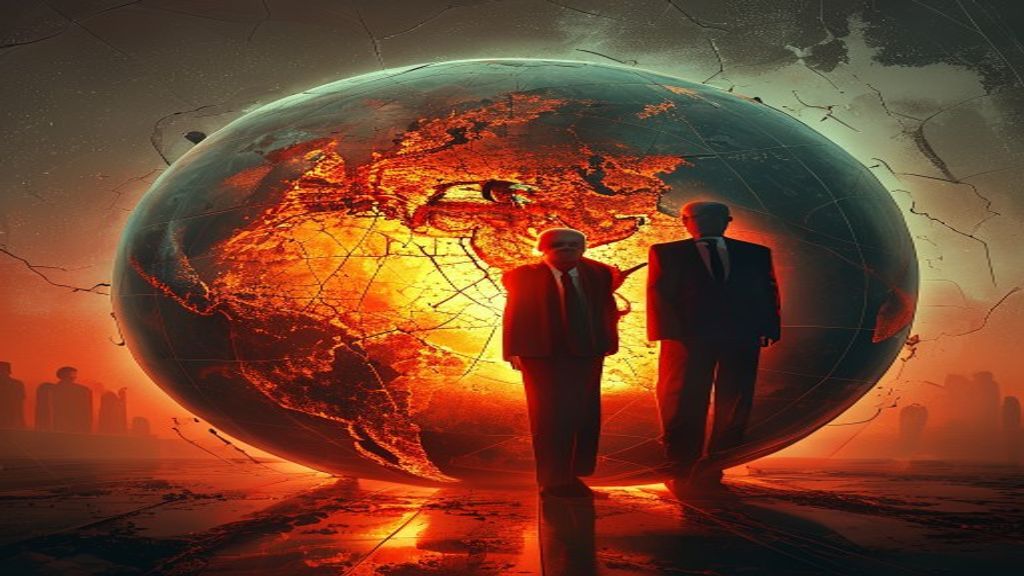
What just happened? The world barely had time to process the ongoing NATO summit discussions when Donald Trump dropped a geopolitical bombshell: the ceasefire with Iran is “over,” and he’s threatening “more strikes.” This isn’t just a headline; it’s a seismic shift, delivered with characteristic bluntness, that throws an already volatile Middle East into deeper uncertainty and puts NATO allies in an impossible position.
The Ceasefire That Wasn’t (Quite)
Let’s be clear: the notion of a stable, formal ceasefire between the U.S. and Iran has always been tenuous, more a fragile understanding than a signed document. Trump’s declaration effectively pulls the rug out from under any pretense of de-escalation. This move, announced while European leaders were attempting to project a united front at the NATO summit, is a masterclass in disruption.
- Strategic Timing: Why now? With a contentious U.S. election looming, this could be seen as a strongman play, designed to project decisiveness and rally a base. It forces allies to react, rather than proactively shape policy.
- NATO’s Tightrope: Allied nations, many with significant economic ties to Iran or a vested interest in regional stability, are now caught between supporting their most powerful member and avoiding a wider conflict. ‘This puts an immense strain on alliance cohesion,’ notes Dr. Anya Sharma, a senior fellow at the Global Security Institute. ‘NATO’s primary focus should be on internal defense and deterrence, not being pulled into a unilateral escalation.’
Unpacking Trump’s Rationale: Calculated Chaos?
Trump’s history with Iran is a rollercoaster of maximum pressure campaigns, withdrawal from the JCPOA, and targeted strikes. His latest threat isn’t an anomaly; it’s an amplification of a consistent, albeit unpredictable, foreign policy doctrine. Is this a genuine intention to escalate, or a tactical maneuver to gain leverage?
‘It’s a high-stakes poker game,’ says former diplomat Mark Chen. ‘Trump often uses extreme rhetoric to test boundaries and force concessions. The question is, who blinks first, and what are the unintended consequences if no one does?’ The potential for miscalculation here is terrifyingly high.
Why This Matters: The Ripple Effect
The implications of this declaration are far-reaching, extending far beyond the immediate flashpoints in the Persian Gulf.
- Economic Volatility: Oil markets are already reacting nervously. A full-blown conflict could send crude prices soaring, impacting everything from gas pump prices to global shipping costs. ‘Investors should brace for significant market turbulence,’ warns financial analyst Sarah Jenkins. ‘Diversify, hedge, and prepare for a flight to safety assets.’ Supply chains, still recovering from previous disruptions, face another potential shockwave.
- Regional Destabilization: Iran’s proxies across the Middle East, from Lebanon to Yemen, could be activated, leading to a cascade of regional conflicts. This isn’t just about direct U.S.-Iran confrontation; it’s about the entire regional security architecture crumbling.
- Erosion of Diplomacy: The ‘ceasefire over’ declaration undermines any remaining diplomatic off-ramps. It signals a preference for confrontation over negotiation, potentially setting a dangerous precedent for international relations.
- Global Credibility: How will the international community view future U.S. commitments? The perception of erratic policy shifts could further isolate the U.S. and empower revisionist powers.
The Bigger Picture: A World on Edge
This isn’t just about one incident or one leader. It’s about the increasing fragility of global peace and the ease with which decades of diplomatic effort can be undone. We are witnessing a moment where the lines between political posturing and actual military action are blurring, and the world holds its breath.
Actionable Takeaways for the Engaged Citizen:
- Stay Informed, Critically: Don’t just consume headlines. Seek out diverse analyses from reputable sources. Understand the historical context.
- Demand Accountability: Engage with your elected representatives. Understand their stance on these critical foreign policy decisions.
- Prepare for Economic Shifts: Recognize that geopolitical instability has tangible economic impacts on your daily life.
The NATO summit, meant to project unity and strength, now serves as a backdrop to an unfolding crisis. Trump’s words have ignited a fuse, and the world is watching to see if diplomacy can reassert itself before the powder keg fully ignites.