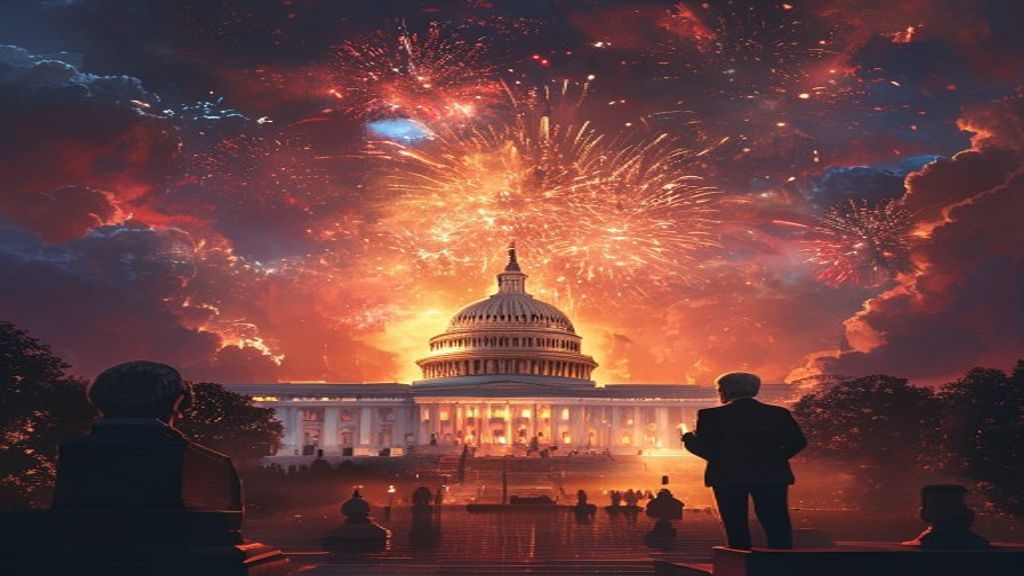
America’s 250th birthday promises a spectacle: fireworks painting the night sky, flyovers roaring overhead, and, reportedly, a ‘really long’ speech from Donald Trump. On the surface, it’s a grand display of national pride, a quarter-millennium marker of a nation’s journey. But beneath the dazzling lights and patriotic fervor, a veteran journalist’s eye can’t help but ask: What exactly are we celebrating, and whose narrative will truly define this pivotal moment?
The Grand Spectacle, The Lingering Question
The announcement of the celebratory events — the pomp, the circumstance, the sheer scale — is designed to evoke awe. And it likely will. Yet, the inclusion of a ‘really long’ speech from a figure as polarizing as Trump immediately shifts the focus from a unifying national commemoration to something far more politically charged. Is this an ode to shared history, or a preemptive strike in an ongoing political battle?
A ‘National’ Celebration or a ‘Personal’ Platform?
National anniversaries, particularly one as significant as 250 years, are meant to transcend partisan divides, offering a moment for collective reflection on shared values and future aspirations. However, the prospect of a lengthy address from a former (and potentially future) president known for his rally-style rhetoric raises immediate red flags.
- The Power of the Podium: Imagine the imagery—a national stage, global attention, and an unfiltered message delivered without the usual media filters.
- The ‘Really Long’ Factor: This isn’t a five-minute greeting; it’s an opportunity for a comprehensive, potentially revisionist, narrative of American history and its present challenges, all through a very specific lens.
‘This isn’t just about commemorating a nation; it’s about cementing a narrative,’ states Dr. Evelyn Reed, a political communications expert at Georgetown. ‘A ‘really long’ speech from a figure like Trump, especially at such a pivotal moment, is less about historical reflection and more about political projection.’
Echoes of History, Shadows of Division
Consider the Bicentennial in 1976. Despite the turmoil of Vietnam and Watergate, the celebration largely focused on unity and a shared sense of purpose. Presidents then, even with their political leanings, understood the delicate balance of national celebrations. This time feels different.
‘Historically, these anniversaries have been moments of genuine national introspection, sometimes even healing,’ observes Professor Arthur Vance, a constitutional historian. ‘The risk here is that the immense gravitas of 250 years could be co-opted, turning a shared heritage into a partisan battleground.’
The Unspoken Costs: Unity, Trust, and the Public Purse
Beyond the direct financial cost of fireworks and flyovers — which will undoubtedly be substantial — there are intangible costs at stake. The very idea of national unity, already fractured, could be further strained if the celebration is perceived as a thinly veiled campaign event.
- Erosion of Trust: When national symbols and events are politicized, public trust in institutions erodes further.
- Opportunity Cost: Resources and attention spent on a potentially divisive spectacle could be directed towards addressing pressing national issues that genuinely unite, like infrastructure or education.
‘The optics are clear: a massive national expenditure, yet the primary takeaway might be a political address rather than a unifying message,’ notes financial analyst Maria Chen. ‘It’s a high-stakes gamble on the public’s perception, and the return on investment for national cohesion could be deeply negative.’
What This Means for America’s Future
The 250th anniversary should be a moment for all Americans to stand together, reflecting on the past and envisioning a common future. If it instead becomes a platform for one voice, one ideology, it sets a dangerous precedent for how national identity is defined and celebrated moving forward.
The Bigger Picture: Beyond the Fireworks
As the fireworks explode and the speeches drone on, it’s critical for citizens to engage with a discerning eye. This isn’t just entertainment; it’s a statement about who we are and who we aspire to be. Will this 250th anniversary be a testament to enduring American ideals, or a stark reminder of our deepest divisions? The answer, perhaps, will be found not in the length of a speech, but in the collective response of a nation watching.
Actionable Takeaways for the Discerning Reader:
- Listen Critically: Pay attention to the themes, historical interpretations, and future visions presented. Is it inclusive or exclusive?
- Seek Diverse Perspectives: Don’t rely solely on one media outlet’s interpretation. Read analyses from across the political spectrum.
- Engage Locally: Participate in local, community-driven celebrations that often embody a more genuine, grassroots spirit of unity.